
-
45
-
2025-08-14 16:36:53
What is a Carbon Brush?
A carbon brush is a component primarily made of carbon, named for its brush-like operation against rotating parts. Its key material is graphite.
What is Graphite?
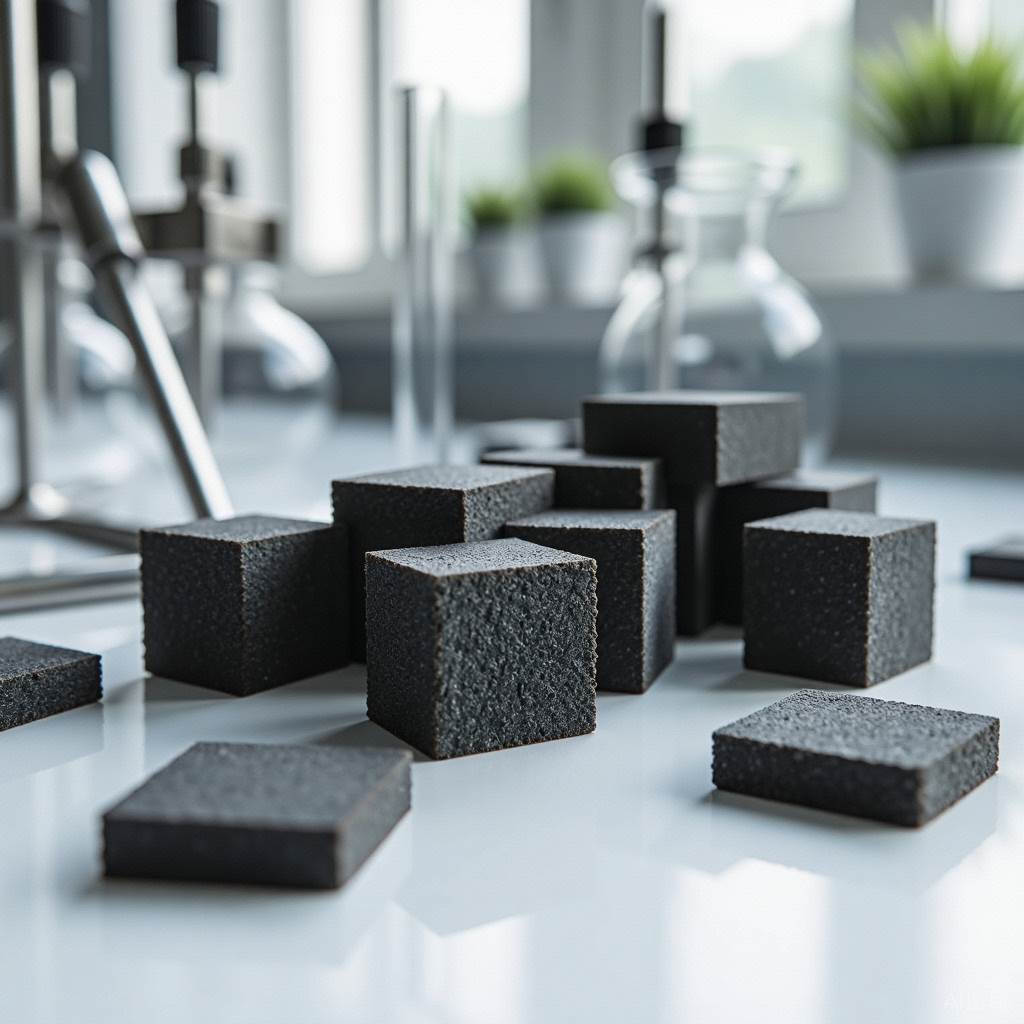
Graphite, the core material of carbon brushes, is a natural element composed of carbon. It is black, opaque, with a semi-metallic luster, and low hardness. Though both graphite and diamond consist of carbon, their properties differ drastically due to distinct atomic structures: graphite has a loose layered arrangement, while diamond forms a dense 3D network.
Graphite’s standout traits include:
- High-temperature resistance: With a melting point of 3652°C, it is used in heat-resistant industrial parts like chemical crucibles.
- Excellent conductivity: Surpassing many metals, it is ideal for conductive components such as electrodes and carbon brushes.
- Self-lubrication: Its layered structure enables lubrication—e.g., pencil shavings (containing graphite) ease rusty door locks.
Beyond basic uses like pencil leads, graphite is the source of graphene, a globally sought-after advanced material.
Brushed Motors
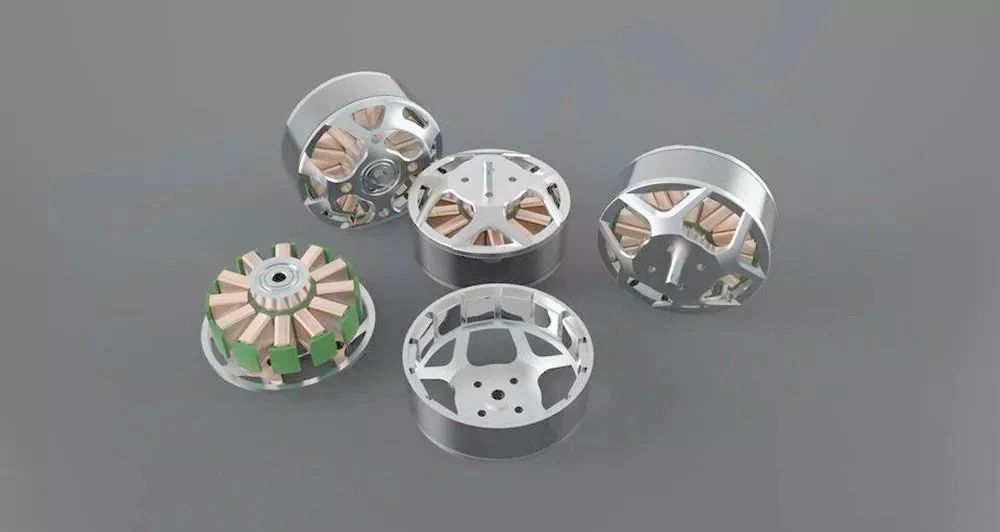
A brushed motor comprises a stator and a rotor. For continuous rotation in DC motors, current direction must reverse repeatedly (analogous to alternating bicycle pedal strokes). This relies on a commutator (two insulated semicircular segments) and carbon brushes: as the commutator rotates, brushes alternately contact its segments, switching current direction to sustain motion.
In operation:
- The commutator and coils rotate; brushes and magnets stay fixed.
- Friction between commutator and brushes enables current reversal.
- Power flows through brushes (pressed by springs) to coils, creating magnetic forces that drive rotation via repulsion/attraction with stator magnets.
Carbon brushes in DC motors conduct current via sliding contact (from stationary to rotating parts) and enable commutation, though this sliding causes wear. They also function in AC motors—e.g., variable-speed tools like drills and polishers—where they wear quickly and require frequent replacement.
History of Carbon Brushes
- 1836: Pixii invented the first DC motor with a commutator, using unstable copper brushes.
- 1883: Forbs introduced carbon-based brushes, but early versions (amorphous carbon bonded with adhesives) had flaws like high abrasiveness.
- 1896: E.G. Acheson’s artificial graphite enabled the first true "carbon brushes," with optimal properties.