
-
33
-
2025-08-15 10:23:59
Materials and Performance Parameters
Carbon materials are preferred for brushes due to light weight, conductivity, thermal efficiency, and self-lubrication. Carbon brushes are categorized into:
- Metal-graphite: Silver-graphite or copper-graphite, ideal for high-power motors.
- Non-metal-graphite: Electrical graphite, carbon-graphite, or resin-graphite, suited for low-noise, wear-sensitive scenarios.
Key parameters (interrelated and balanced for performance):
- Resistivity: Higher values suppress sparking but reduce efficiency and may cause overheating.
- Flexural strength: Higher strength enhances wear resistance.
- Hardness: Increased hardness boosts durability but raises noise and commutator wear.
- Density: Higher density improves wear resistance, correlating with lower resistivity and higher strength.
Manufacturing Process
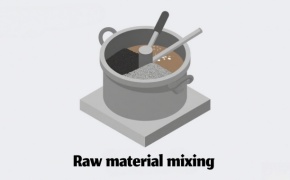
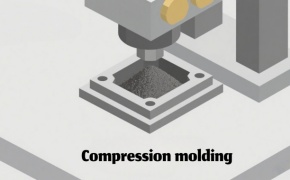
- Compression molding: Mix carbon powder, additives, and binders, then press into shapes.
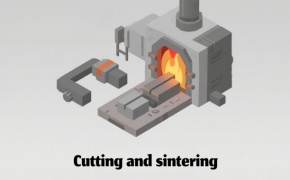
- Cutting and sintering: Cut into sizes and sinter to stabilize properties.
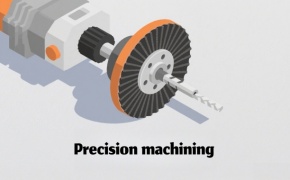
- Precision machining: Refine dimensions (e.g., curved surfaces) and drill holes.
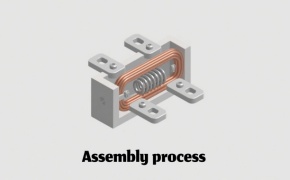
- Assembly: Embed copper wires, add springs/connectors, and install stop rods.
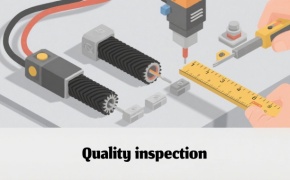
- Inspection and packaging: Ensure quality before delivery.
Practical Usage Tips
- Spring pressure: Excessive pressure accelerates wear; insufficient pressure causes sparking. Recommended ranges:
- Electrical graphite: 1.5–3.0N/cm²
- Metal-graphite: 1.5–3.5N/cm²
- Resin/carbon-graphite: 3–5N/cm²
- Natural graphite: 1.2–2.5N/cm²
- Contact film: A balanced film thickness enhances conductivity and lubrication. Too thin: increased wear; too thick: overheating and sparking.
- Pigtail diameter: Must match current capacity to avoid arcing. Example specifications:
|
Cross-sectional Area (mm²) |
Diameter (mm) |
Max Current (A) |
|
0.25 |
0.7 |
5.6 |
|
0.5 |
1 |
9 |
|
1.5 |
1.9 |
20 |
Impact on EMC
Commutating sparks from carbon brushes in series-wound motors disrupt electromagnetic compatibility (EMC). Mitigation steps include:
- Using softer brushes, smoother commutators, and optimal spring pressure.
- Balancing resistivity and segment span to reduce sparking (without compromising wear resistance).
- Adding circuit components (capacitors, inductors) or adjusting rotor alignment.
Current Status and Future
Cordless tools (AC-to-DC) have reduced carbon brush use, as brushless motors (1000+ hour lifespan) outlast brushed ones (300–500 hours). However, brushed motors with carbon brushes remain cost-effective for extreme/harsh conditions.
Carbon brushes remain critical to series-wound motor performance, with ongoing advancements targeting lower wear and smarter design.
This overview aims to aid in selecting and applying carbon brushes effectively.
click 33Reply 0
Original post
2025-08-15 10:23