
-
19
-
2025-08-18 13:03:56
Electric bicycles and electric motorcycles may bear some resemblance in appearance, but they differ significantly in technical specifications, regulatory requirements, performance, and intended use. Gaining a clear understanding of these distinctions is crucial for selecting the most suitable electric vehicle for one’s needs.
1. Power and Speed: Assistance vs. High Performance
- **Electric Bicycles**: These are typically equipped with low-power electric motors, usually ranging from 250 to 500 watts. Their maximum speed is legally restricted, generally capped at 25 to 32 kilometers per hour. The core design philosophy of electric bicycles is to provide "assisted power"—they complement rather than replace human effort, easing fatigue during uphill climbs, long-distance rides, or against strong headwinds. Riders can still choose to pedal without relying on the motor, blending the benefits of physical activity with electric assistance.
- **Electric Motorcycles**: In contrast, electric motorcycles feature much more powerful motors, with power outputs often reaching several thousand watts. This allows them to achieve significantly higher top speeds and stronger acceleration, comparable to traditional gasoline-powered motorcycles. Designed for efficient, high-speed travel, they are capable of maintaining consistent speeds over longer distances, making them suitable for commutes that require quick traversal of urban or suburban areas.
2. Design and Structure: Lightweight vs. Robust
- **Electric Bicycles**: They retain the fundamental structure of a conventional bicycle, including functional pedals, a lightweight frame (often made of aluminum or carbon fiber), and a compact design. The integration of the motor and battery is usually streamlined to preserve the bike’s agility and portability—many models can even be folded for easy storage in small spaces like apartments or car trunks. The emphasis is on balancing electric assistance with the natural feel of cycling.
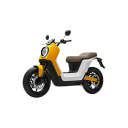
- **Electric Motorcycles**: Their design closely mirrors that of traditional motorcycles, with no pedals and a sturdier, heavier frame (typically steel or alloy) to support the larger motor, battery, and higher load. They feature larger, thicker tires for improved stability at high speeds and better traction on varied road surfaces (e.g., wet or uneven roads). The overall structure is built to withstand the stresses of sustained high-performance use, with components like suspension systems and brakes upgraded to match their power capabilities.
3. Regulatory Requirements: Non-Motor Vehicle vs. Motor Vehicle
- **Electric Bicycles**: In most countries and regions, electric bicycles are classified as "bicycles" or "non-motorized vehicles." This means they generally do not require a driver’s license, vehicle registration, or mandatory insurance. However, strict regulations often apply to their power and speed to maintain this classification—exceeding the specified wattage or speed limits may reclassify them as motor vehicles, subjecting them to additional legal requirements. For example, the European Union enforces a 250-watt motor limit and 25 km/h speed cap for e-bikes to qualify as "pedelecs" (pedal-assisted bicycles).
- **Electric Motorcycles**: These are universally categorized as "motor vehicles," subject to the same regulations as traditional motorcycles. Riders must hold a valid motorcycle license, and the vehicle must be registered, insured, and meet safety standards (e.g., lighting, braking, and emissions, though electric models have no exhaust emissions). They are also required to follow traffic rules applicable to motor vehicles, such as using designated lanes and adhering to speed limits on highways.
4. Usage and Purpose: Leisure/Short Commutes vs. Efficient Long-Distance Travel
- **Electric Bicycles**: Ideal for short-distance daily commutes (e.g., 5–15 kilometers), leisure rides in parks or suburban areas, and even light exercise. They appeal to users who want to reduce physical exertion without sacrificing the enjoyment of cycling. Their compact size and maneuverability make them well-suited for navigating crowded city streets, bike lanes, or narrow paths where larger vehicles struggle to pass.
- **Electric Motorcycles**: Designed for users needing faster, longer-distance transportation. They excel in commutes spanning 20 kilometers or more, efficiently connecting urban and suburban areas. As an eco-friendly alternative to gasoline motorcycles, they offer the convenience of quick refueling (via charging) and lower noise pollution, making them a practical choice for environmentally conscious riders who prioritize speed and range.
5. Cost and Maintenance: Affordability vs. Performance Investment
- **Electric Bicycles**: Generally more affordable, with prices ranging from a few hundred to a couple of thousand dollars, depending on features like battery capacity and frame material. Maintenance costs are low, as they have fewer complex components—upkeep primarily involves battery care (e.g., regular charging to preserve lifespan) and basic bicycle maintenance (e.g., tire inflation, brake adjustments).
- **Electric Motorcycles**: Tend to be more expensive, with prices often starting at several thousand dollars and rising with higher power and battery capacity. Maintenance costs are also higher due to their more complex systems, including high-voltage batteries, advanced motor controllers, and specialized braking systems. While they require less frequent maintenance than gasoline motorcycles (no oil changes, for example), repairs or replacements of key components (like batteries or motors) can be costly.
In summary, while both electric bicycles and electric motorcycles run on electricity, their design intentions, performance metrics, legal classifications, and intended uses set them apart. Electric bicycles are essentially "bicycles with electric assistance," prioritizing affordability, simplicity, and integration with human effort. Electric motorcycles, by contrast, are "electrified motor vehicles," offering high performance and speed for efficient long-distance travel. When choosing between them, users should consider their daily commute distance, speed needs, budget, and local regulations to make an informed decision.